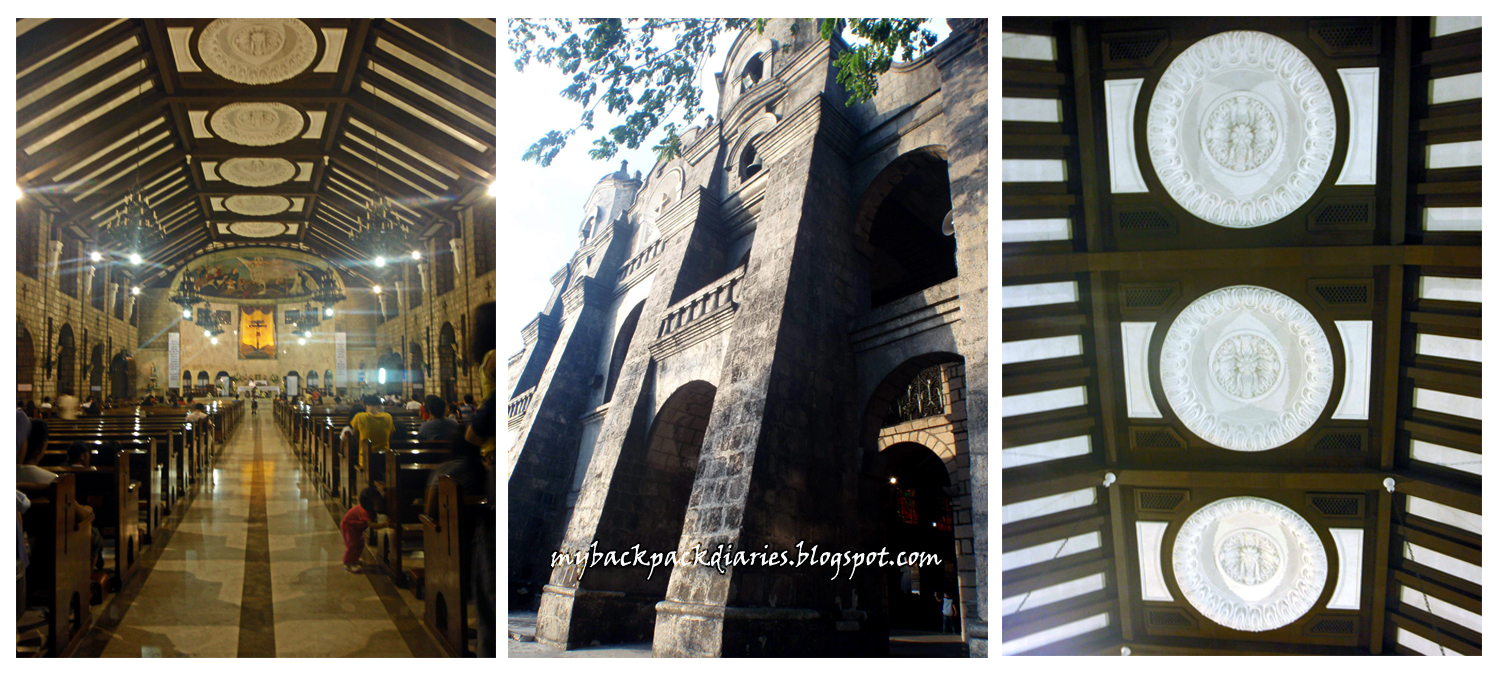
When craving for Chinese food in Manila, Binondo is probably the first we have in mind. As home to most of Filipino-Chinese nationals (Tsinoy) it is just right to think that this is the perfect place to experience authentic Chinese cuisine. As I've wandered the streets of Binondo, it proved me that one would have lots of options since Chinese restaurants have sprouted almost beside each other. A close friend and I have planned on a food trip but since schedules seemed not to cooperate, and I think it's not happening anytime soon yet, I took the liberty of doing it myself first. It's like a movie - I just did the trailer first, the rest will be shared when our plans finally push through.
Dong Bei Dumpling
Eating in Dong Bei was a result of a friend's recommendation. I was told their dumplings are made fresh everyday and tastes really good. You could even see the kitchen helpers on how they do it. Upon hearing that, I planned of trying it out.
The store is located in 642 Yuchengco St., a walking distance from Binondo Church. It is in an area that is not easy to find, almost in the end of a street so checking in Google maps would surely pay off before you hit this small and unpretentious restaurant.

When we arrived, it's about 6PM and all 6 tables are occupied. The restaurant's lady owner is very hands-on. She instructed her staff whose using one of the tables to make dumplings to clean it up so we can use it as a dining table. They were quick enough that in just a blink of an eye (Yes, I'm exaggerating), our table was ready. We we're asked what to order and of course, first on my list is the chives dumplings. I added Dong-Bei's fried rice, Stuffed Tofu and Pancakes. I was amazed with their affordable prices.

Despite many customers come and go (some just drop by to buy take out dumplings), it only took a few minutes for our order to arrive. Perfect because I was starving from walking that time. I've heard a lot of raves about Dong Bei and maybe my taste buds are a bit different. Although I found the dumpling appetizing and good, the dumplings tasted a little bland to me as well as the dip. (comparing to other dumplings I tried before) Nevertheless, it met my expectation for I could really taste the freshness and the aroma of the chive is perfect.

Being a fan of tofu though, I loved their stuffed tofu. It was stuffed with tender pork that up til now, I'm wondering how they managed to make the pork stick on both sides of the tofu. It came with a small amt of broth that tastes meaty.

The pancake is made of the same ingredients as the steamed dumpling but was made flat like a pancake and fried. It was crispy on the outside and soft on the inside. It might have something to do with their cooking technique, they were able to achieve that balance even if the pancake is just thin. It is best eaten while it's still hot and newly fried, in time it will get saggy and oily. That's when you may want to order soft drinks. :)

Overall, I enjoyed my dining experience in Dong Bei although it could have been better if the place didn't feel crowded. Maybe that is just how things run considering the place is really small. The next time I'm craving for dumplings, I might just drop by, make a bulk order and store it in my fridge then I'll make a dip that will better suit my taste. I know it will be perfect then.
Kim Hiong Food Garden

One Sunday afternoon, I was strolling the streets of Sta. Cruz, checking out cheap finds along Rizal Ave. After I got bored I walked towards Sta Cruz Church then decided to walk around. It was my first time to step foot in that area. I passed by this restaurant along Ongpin St. that got my attention. They have a lot of customers, and more are entering their door. The place looked very simple and I assumed they might have delicious and affordable food. I walked inside and was guided to sit on a table near the corner. Most of their customers are in group, either friends or families. I felt out of place. Hahaha! I was provided with a menu. I hurriedly checked what they offer and was caught off guard by the prices, lol! The cheapest is Php220 and I'm alone, which meant I couldn't afford to order more than one food and if I do, I might be washing the dishes in their kitchen before I'm allowed to leave, hahaha! Besides I don't have a big appetite.

I'm not really a food expert and didn't know what to order so I asked their server about her recommendation. I took her advise and in about ten minutes, I was served the fried noodles with beef and shrimp and a cola. This restaurant practices Chiuchow (Teochew) style of Chinese cooking. To be honest, haven't tried it before but I know this cuisine uses oil in cooking at a minimum, probably the reason why the noodles didn't look fried to me. The serving is for 2 to 3 people so I realized the price is reasonable. I actually was not able to finish it because I felt so full after finishing a third of my order. I like how it tasted, it has a bit smoky taste, a bit sweet and really savory. The beef and shrimp are perfectly cooked. I am not able to describe it in a more technical term but just look at the picture, thought it also looked delicious. :D

This restaurant is near the Chinese arch , adjacent to Sta Cruz Church. It is located along Ongpin St., near the corner of Gonzalo Puyat St., walking distance from Rizal Ave.
Wan Chai Tea House
This time, I was with boyfriend. It had been raining the past days and the weather might be the reason why I had sudden cravings for noodles and dimsum. We dropped by Binondo church first since he have not seen the church yet. From there we walked towards Ongpin St, then turned left to Benavidez St. There are a lot of restaurants to choose from, we specifically looked for Wan Chai though.

Upon entering their restaurant, which looked bright, we were welcomed by a lady at the door. She guided us to an empty table and was promptly provided their menu. It took us several minutes to browse through their wide range of menu before finally deciding what we wanted for dinner.


To give way to my craving, I ordered beef noodles. Nikko, being a rice person ordered Pork sweet and sour, his favorite - and ironically one of those few food I won't eat if I have other options. We added hakaw (shrimp dumplings) and kuchai dumplings out of curiosity. I've known kuchai as a medicinal plant to cure bruises, didn't know it can be eaten. We planned on trying their milk tea but it was not available :( so we settled with iced tea that tasted ordinary, like the powdered tea available in the grocery.


When our order arrived, everything looked appetizing (or maybe it's just me starving). The bowl of beef noodles is bigger than what I expected, probably can be shared by two people. It's tasty but thought it's a little salty. Both the dumplings are a real treat though. It didn't taste like any other I've tasted before. If tasted fresh, the flavor is light and well - it tasted Chinese. We loved it. The sweet and sour pork is the best I've tasted from the rest. Maybe if it was my first time to try this, I might have liked this dish from the start. Whatever the chef used for the sauce, everything was perfectly blended.


They have a wide range of selection for the menu. Range of prices start from Php60 and can get as high as Php1,500 depending on what you're ordering. I think it would be best to go in a group if you're trying not to spend much and wanted to try more of their dishes. I know I'll be back here in Wan Chai. :)
Dong Bei Dumpling
Eating in Dong Bei was a result of a friend's recommendation. I was told their dumplings are made fresh everyday and tastes really good. You could even see the kitchen helpers on how they do it. Upon hearing that, I planned of trying it out.
The store is located in 642 Yuchengco St., a walking distance from Binondo Church. It is in an area that is not easy to find, almost in the end of a street so checking in Google maps would surely pay off before you hit this small and unpretentious restaurant.

When we arrived, it's about 6PM and all 6 tables are occupied. The restaurant's lady owner is very hands-on. She instructed her staff whose using one of the tables to make dumplings to clean it up so we can use it as a dining table. They were quick enough that in just a blink of an eye (Yes, I'm exaggerating), our table was ready. We we're asked what to order and of course, first on my list is the chives dumplings. I added Dong-Bei's fried rice, Stuffed Tofu and Pancakes. I was amazed with their affordable prices.

14 pcs dumplings for Php100
Despite many customers come and go (some just drop by to buy take out dumplings), it only took a few minutes for our order to arrive. Perfect because I was starving from walking that time. I've heard a lot of raves about Dong Bei and maybe my taste buds are a bit different. Although I found the dumpling appetizing and good, the dumplings tasted a little bland to me as well as the dip. (comparing to other dumplings I tried before) Nevertheless, it met my expectation for I could really taste the freshness and the aroma of the chive is perfect.

Dong Bei fried rice for Php60

Stuffed tofu for Php150
The pancake is made of the same ingredients as the steamed dumpling but was made flat like a pancake and fried. It was crispy on the outside and soft on the inside. It might have something to do with their cooking technique, they were able to achieve that balance even if the pancake is just thin. It is best eaten while it's still hot and newly fried, in time it will get saggy and oily. That's when you may want to order soft drinks. :)

pancake for Php150
Overall, I enjoyed my dining experience in Dong Bei although it could have been better if the place didn't feel crowded. Maybe that is just how things run considering the place is really small. The next time I'm craving for dumplings, I might just drop by, make a bulk order and store it in my fridge then I'll make a dip that will better suit my taste. I know it will be perfect then.
Kim Hiong Food Garden

One Sunday afternoon, I was strolling the streets of Sta. Cruz, checking out cheap finds along Rizal Ave. After I got bored I walked towards Sta Cruz Church then decided to walk around. It was my first time to step foot in that area. I passed by this restaurant along Ongpin St. that got my attention. They have a lot of customers, and more are entering their door. The place looked very simple and I assumed they might have delicious and affordable food. I walked inside and was guided to sit on a table near the corner. Most of their customers are in group, either friends or families. I felt out of place. Hahaha! I was provided with a menu. I hurriedly checked what they offer and was caught off guard by the prices, lol! The cheapest is Php220 and I'm alone, which meant I couldn't afford to order more than one food and if I do, I might be washing the dishes in their kitchen before I'm allowed to leave, hahaha! Besides I don't have a big appetite.

I'm not really a food expert and didn't know what to order so I asked their server about her recommendation. I took her advise and in about ten minutes, I was served the fried noodles with beef and shrimp and a cola. This restaurant practices Chiuchow (Teochew) style of Chinese cooking. To be honest, haven't tried it before but I know this cuisine uses oil in cooking at a minimum, probably the reason why the noodles didn't look fried to me. The serving is for 2 to 3 people so I realized the price is reasonable. I actually was not able to finish it because I felt so full after finishing a third of my order. I like how it tasted, it has a bit smoky taste, a bit sweet and really savory. The beef and shrimp are perfectly cooked. I am not able to describe it in a more technical term but just look at the picture, thought it also looked delicious. :D

This restaurant is near the Chinese arch , adjacent to Sta Cruz Church. It is located along Ongpin St., near the corner of Gonzalo Puyat St., walking distance from Rizal Ave.
Wan Chai Tea House
This time, I was with boyfriend. It had been raining the past days and the weather might be the reason why I had sudden cravings for noodles and dimsum. We dropped by Binondo church first since he have not seen the church yet. From there we walked towards Ongpin St, then turned left to Benavidez St. There are a lot of restaurants to choose from, we specifically looked for Wan Chai though.

Upon entering their restaurant, which looked bright, we were welcomed by a lady at the door. She guided us to an empty table and was promptly provided their menu. It took us several minutes to browse through their wide range of menu before finally deciding what we wanted for dinner.


To give way to my craving, I ordered beef noodles. Nikko, being a rice person ordered Pork sweet and sour, his favorite - and ironically one of those few food I won't eat if I have other options. We added hakaw (shrimp dumplings) and kuchai dumplings out of curiosity. I've known kuchai as a medicinal plant to cure bruises, didn't know it can be eaten. We planned on trying their milk tea but it was not available :( so we settled with iced tea that tasted ordinary, like the powdered tea available in the grocery.


When our order arrived, everything looked appetizing (or maybe it's just me starving). The bowl of beef noodles is bigger than what I expected, probably can be shared by two people. It's tasty but thought it's a little salty. Both the dumplings are a real treat though. It didn't taste like any other I've tasted before. If tasted fresh, the flavor is light and well - it tasted Chinese. We loved it. The sweet and sour pork is the best I've tasted from the rest. Maybe if it was my first time to try this, I might have liked this dish from the start. Whatever the chef used for the sauce, everything was perfectly blended.


They have a wide range of selection for the menu. Range of prices start from Php60 and can get as high as Php1,500 depending on what you're ordering. I think it would be best to go in a group if you're trying not to spend much and wanted to try more of their dishes. I know I'll be back here in Wan Chai. :)